- Silver Hill Auto Repair
- Auto Repair
Shaky Steering? Don’t Ignore It : Here’s What Your Suspension Is Trying to Tell You
A steering wheel that shakes is more than an annoying inconvenience. It is often your vehicle’s way of telling you that something needs attention in the tires, brakes, steering system, or suspension.
You may notice the vibration at highway speeds, when braking, while turning, or after hitting a pothole. The exact timing matters because it can help narrow down the cause. In every case, though, persistent shaking deserves a professional inspection: especially if your vehicle also pulls to one side, makes clunking noises, or feels unstable.
At Silver Hill Auto Repair, we help drivers in Suitland and throughout the DMV area identify the source of handling problems before they become more expensive or dangerous. Here’s what your vehicle may be trying to tell you.
What a Shaky Steering Wheel Can Mean
Suspension and steering components work together to keep your tires pointed in the right direction and connected securely to the road. When one part wears out, the symptoms can overlap.
A shaking steering wheel may be caused by:
- An unbalanced tire or wheel
- A bent wheel after hitting a pothole
- Uneven or cupped tire wear
- Misaligned wheels
- Worn tie rod ends or ball joints
- Damaged control arm bushings
- Worn shocks, struts, or strut mounts
- Brake rotor or pad problems
- Loose wheel hardware
That is why replacing one part based only on a symptom can waste money. A proper diagnosis should include the tires, wheels, brakes, steering, and suspension rather than focusing on one component too quickly.
When Does the Shaking Happen?
Pay close attention to when the vibration occurs. Your answer can help a technician find the problem more efficiently.
Shaking at Certain Speeds
If your steering wheel begins vibrating around 50 to 65 mph and becomes more noticeable as you accelerate, the likely causes include tire imbalance, uneven tire wear, or a bent wheel. A wheel balance issue may start as a mild vibration but can become more distracting and damaging over time.
Misalignment can also cause the vehicle to feel unstable. More importantly, it can wear the inside or outside edge of your tires prematurely. If you see cupping, scalloped tread, or one-sided wear, have the tires and suspension inspected together.
Shaking When You Brake
Does the steering wheel shake when you slow down from highway speeds? Does the brake pedal pulse under your foot?
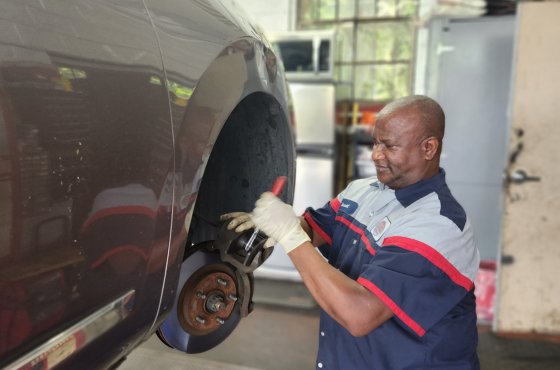
Those symptoms can point to brake rotor runout, uneven pad wear, or another problem in the braking system. Repeated hard stops, heavy traffic, and excessive heat can contribute to brake vibration. Drivers who spend a lot of time in stop-and-go traffic around Suitland, Branch Avenue, or the Capital Beltway may put more heat into their brakes than they realize.
If you are searching for brake service near me, do not wait until vibration becomes grinding. A technician should measure the rotors, inspect pad thickness, check caliper operation, and look for leaks or damaged hardware. You can also learn more about brake warning signs in our guide to brake service and stopping power.
Shaking Over Bumps or While Turning
A clunk, knock, or rattle over bumps may indicate worn suspension parts. Common possibilities include:
- Tie rod ends
- Ball joints
- Control arm bushings
- Sway bar links
- Strut mounts
- Shocks or struts
These components affect how well your vehicle responds to steering input. If they develop excessive play, your vehicle may wander, pull, or feel loose in corners.
A worn shock or strut may also allow the vehicle to bounce repeatedly after a bump. You might notice more body roll in turns, a nose-diving sensation during braking, or a rear end that squats under acceleration. These changes reduce tire contact with the road and can affect stopping and handling.
Warning Signs That Make the Problem More Urgent
Some suspension and steering symptoms should not be ignored or treated as a comfort issue.
Schedule an inspection promptly if you notice:
- The car pulls strongly to the left or right
- The steering feels loose, delayed, or difficult to control
- The vehicle wanders within your lane
- A corner of the car sits lower than the others
- You hear a loud clunk when turning or hitting a bump
- A tire is wearing unevenly or rapidly
- The vehicle continues bouncing after a bump
- You see fluid leaking near a shock, strut, or wheel
- The steering wheel is suddenly off-center
- The shaking is getting worse quickly
If the steering becomes difficult to control, a wheel feels loose, or you hear severe grinding, avoid highway driving. Arrange professional help before continuing to operate the vehicle.
Why Suspension Problems Can Become Expensive
Suspension wear rarely stays isolated. For example, a worn tie rod can allow alignment to change. That misalignment may then damage a tire. A worn strut can cause the tire to bounce against the road, creating cupping and reducing grip. A neglected brake issue can damage rotors, calipers, and other hardware.
Fixing the original problem early is usually more cost-effective than replacing multiple connected parts later. It also helps protect your tires, improve ride quality, and maintain predictable handling.
Regular inspections are especially useful if you drive over potholes, carry heavy loads, or spend most of your time in urban traffic. As a general guideline, have the suspension checked around every 50,000 miles, or sooner if your vehicle develops a change in ride or handling. Your owner’s manual may recommend a different schedule based on the make and model.
A brake inspection every 10,000 to 12,000 miles: and during routine oil changes: is also a practical way to catch wear before it becomes a safety concern. For broader maintenance guidance, see our preventive maintenance guide for drivers in Suitland.
What a Professional Inspection Should Include
A trustworthy auto repair shop should explain what it finds rather than simply recommending parts.
A suspension and steering inspection may include:
- Checking tire pressure, tread depth, wear patterns, and damage
- Inspecting wheels, lug nuts, and wheel bearings
- Testing steering linkage for looseness or excessive play
- Examining tie rods, ball joints, control arms, and bushings
- Checking shocks, struts, springs, and mounts for damage or leaks
- Inspecting brake pads, rotors, calipers, and brake lines
- Checking alignment when tire wear or pulling is present
- Road-testing the vehicle to reproduce the vibration or handling concern
Electronic diagnostics may help identify problems with systems such as ABS, stability control, or electronic steering. However, many suspension issues require a hands-on inspection. A scan alone cannot confirm whether a bushing is cracked, a ball joint is loose, or a strut is leaking.
Silver Hill Auto Repair provides diagnostics and inspections along with steering, suspension, and brake repairs for all makes and models.
Steering and Suspension Issues Before a Maryland Safety Inspection
If you are preparing for a Maryland safety inspection, do not ignore a shaky steering wheel or unstable ride. Maryland safety standards include important equipment such as brakes, steering, suspension, properly aligned wheels, and wheel lugs. The Maryland Motor Vehicle Administration explains the inspection process and requirements.
A vehicle with worn steering components, damaged suspension parts, unsafe brakes, or serious tire problems may not pass. Having the vehicle checked before the inspection gives you time to address defects and avoid an unexpected delay.
Silver Hill Auto Repair is an authorized Maryland Vehicle Safety Inspection Station and can also help diagnose and repair issues involving your brakes, steering, suspension, and tires. Our automotive repair services in Suitland cover everything from routine maintenance to complex repairs.
Choose an Affordable Mechanic You Can Trust
A repair estimate should be clear about the problem, the recommended repair, and what may happen if the work is delayed. You should also feel comfortable asking whether a repair is urgent, whether related parts need attention, and what options are available for your budget.
As a family-owned auto repair shop serving Suitland and the greater DMV area since 2005, Silver Hill Auto Repair focuses on transparent pricing and personalized service. Our ASE-certified technicians bring more than 100 years of combined experience, and every service is backed by our 100% quality guarantee. We also offer flexible financing options through Koalafi and EasyPay Finance for qualifying repairs.
Conclusion: Let’s Find the Cause Before It Gets Worse
A shaky steering wheel may come from something as simple as wheel balance, but it can also signal worn suspension components, brake trouble, or a steering problem. Because these systems affect your control, tire life, and stopping distance, the safest approach is to have the vehicle inspected promptly.
If your car is vibrating, pulling, bouncing, or making unusual noises, book service with Silver Hill Auto Repair. Our team in Suitland can diagnose the issue, explain your options, and help you get back on the road with confidence.