
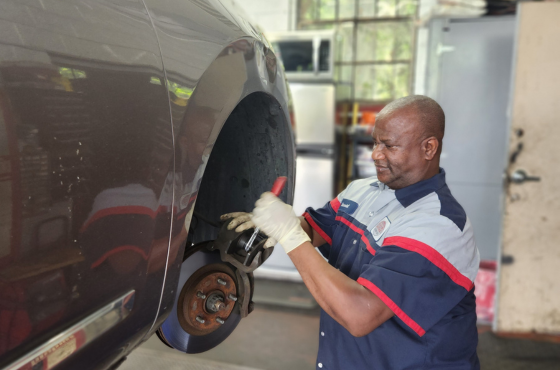
Your brakes do more than bring your car to a stop. They help you avoid a collision, control your vehicle in traffic, and stay safe on busy roads around Suitland and the greater DMV area.
The challenge is that brake problems often develop gradually. You may notice a faint squeal, a slightly different pedal feel, or a vibration that comes and goes. It can be tempting to ignore these signs, especially when your car still seems to drive normally.
That delay can turn a routine brake job into a much more expensive repair. If you notice any of the following warning signs, it may be time to search for brake service near me and schedule a professional inspection.
1. Your Brakes Squeal or Squeak
A high-pitched squeal when you press the brake pedal is one of the most common signs of brake pad wear.
Many brake pads include a small metal wear indicator. As the friction material becomes thin, the indicator touches the rotor and creates a noticeable squeal. This sound is designed to get your attention before the pads wear down completely.
Occasional noise can come from moisture, surface rust, or road debris. However, persistent squealing should not be dismissed, especially if it happens during most stops.
A technician can measure the remaining pad material and determine whether you need new pads or whether another component is causing the noise.
2. You Hear Grinding or Metal-on-Metal Scraping
Grinding is more serious than squealing. It often means the brake pad’s friction material has worn away and its metal backing plate is contacting the rotor.
Continuing to drive in this condition can quickly damage the rotor. It may also create excessive heat and place additional stress on the caliper and other brake components. What could have been a straightforward pad replacement may become a larger repair involving pads, rotors, calipers, or related hardware.
If you hear harsh grinding every time you stop, avoid driving unless you are moving the vehicle to a safe location. Contact an auto repair shop and ask about the safest way to have the car inspected or towed.
3. The Steering Wheel or Brake Pedal Vibrates
Does the steering wheel shake when you brake from highway speed? Do you feel a pulsing sensation through the brake pedal?
These symptoms can point to uneven rotor surfaces, excessive heat, rotor runout, or uneven brake pad contact. The vibration may be subtle at first, then become more noticeable as the problem progresses.
Stop-and-go driving around the DMV, repeated hard braking, heavy loads, and steep roads can all increase heat in the braking system. A professional inspection should include measuring rotor thickness and checking the rotor and hub assembly for runout.
Replacing only the pads may not solve the problem if the rotors are below specification or unevenly worn.
4. Your Car Takes Longer to Stop
Your vehicle should respond predictably when you press the brake pedal. If it takes more distance to stop than it used to, do not wait for the problem to become obvious.
Longer stopping distances can result from worn brake pads, glazed friction surfaces, damaged rotors, contaminated brake fluid, or a problem with the hydraulic system. Tire condition and road surface also affect stopping, but any sudden change in braking performance deserves attention.
This warning sign is particularly important in wet weather or heavy traffic. A few additional feet can determine whether you stop safely behind another vehicle or become involved in a collision.
If your braking response feels weaker, schedule brake service promptly. If the change is sudden, limit driving until the vehicle has been inspected.
5. The Brake Pedal Feels Soft, Spongy, or Sinks
A brake pedal should feel firm and consistent. If it feels soft, spongy, or travels closer to the floor than normal, there may be air in the brake lines, low or contaminated brake fluid, a leak, or another hydraulic problem.
A pedal that continues sinking while you hold pressure is especially concerning. It can indicate that the system is not maintaining hydraulic pressure correctly.
Do not treat a soft pedal as a normal part of an aging vehicle. Have the brake system checked as soon as possible. If the pedal nearly reaches the floor or the vehicle is difficult to stop, do not drive it to the shop. Arrange for professional assistance instead.
6. Your Vehicle Pulls Left or Right When Braking
A vehicle that pulls to one side during braking may have an unevenly operating caliper, a sticking brake component, uneven pad wear, or a hydraulic imbalance.
Pulling makes emergency stops less predictable. It can also increase wear on the tires and suspension because the vehicle is not slowing evenly on both sides.
A technician will typically compare brake pad wear across the axle, inspect the calipers and slide pins, check the brake lines, and evaluate the rotors. The cause may be in the braking system, but alignment, tire pressure, or suspension issues can sometimes create similar handling symptoms.
If your car pulls sharply when you brake, have it inspected before your next regular commute.
7. The Brake Warning Light Comes On
Your dashboard brake warning light should never be ignored. Depending on the vehicle, it may indicate low brake fluid, a parking brake that has not been fully released, worn brake pads, or a problem with the brake system or ABS.
If the ABS warning light appears alongside the regular brake warning light, the vehicle may still stop, but its anti-lock braking function may not operate correctly in an emergency.
Check that the parking brake is fully released. If the warning light remains on, schedule a diagnostic inspection. Do not assume the light is only an electrical glitch without having the system tested.
When Is It Unsafe to Keep Driving?
Some brake symptoms allow you to drive carefully to a nearby repair facility. Others require you to stop driving and arrange a tow.
Avoid driving the vehicle if:
- You hear continuous grinding or metal-on-metal scraping.
- The brake pedal sinks nearly to the floor.
- The vehicle takes dramatically longer to stop.
- Brake fluid is leaking beneath the vehicle or around a wheel.
- The car pulls severely during braking.
- The brake warning and ABS lights appear together.
- You smell strong burning odors after normal braking.
If you are uncertain, call an affordable mechanic for guidance before getting back on the road. Saving a short trip is not worth risking brake failure or additional damage.
What Happens During a Professional Brake Inspection?
A proper brake inspection should look at more than the visible pad surface. At Silver Hill Auto Repair, a technician can evaluate the complete braking system, including:
- Brake pad thickness and wear pattern
- Rotor thickness, condition, and surface wear
- Caliper operation and slide-pin movement
- Brake fluid level and condition
- Brake hoses and hard lines for leaks or corrosion
- Parking brake operation
- ABS warning lights and stored diagnostic codes
- Wheel bearings and related components when needed
The technician should explain what requires immediate attention, what can be monitored, and what parts meet the manufacturer’s specifications. That clear information helps you make a safe and cost-effective repair decision.
Brake inspections are also useful during routine maintenance. As a general guideline, have the brakes checked with an oil change and at least every 10,000 to 12,000 miles, while following your vehicle manufacturer’s maintenance schedule. Drivers who spend most of their time in stop-and-go traffic may need inspections more often.
Why Delaying Brake Service Can Cost More
Brake pads are designed to wear. Rotors and calipers are more expensive components that should last longer when the system is maintained properly.
Replacing worn pads before they reach the backing plate may help protect the rotors. Ignoring squealing until it becomes grinding can damage those rotors and create additional heat. A sticking caliper can also wear one pad much faster than the other and affect fuel economy, tire wear, and vehicle control.
Prompt service is not just about avoiding a larger repair bill. It protects your stopping performance, supports vehicle longevity, and gives you greater confidence behind the wheel.
Get Brake Service in Suitland and Around the DMV
If you are looking for brake service near me, Silver Hill Auto Repair provides brake inspections and repairs for all makes and models in Suitland and the surrounding DMV area. The shop’s services include brake pad and rotor repairs, brake fluid concerns, ABS-related issues, and broader diagnostics.
Silver Hill Auto Repair is also an authorized Maryland safety inspection station, making it convenient to address safety-related concerns in one place. You can learn more about brake repair and automotive services in Suitland or book an appointment online. You can also call (301) 316-8030 to discuss your symptoms.
Your brakes should feel firm, quiet, and predictable. If your car is showing any of these seven signs, schedule an inspection before a small issue becomes a serious safety concern.